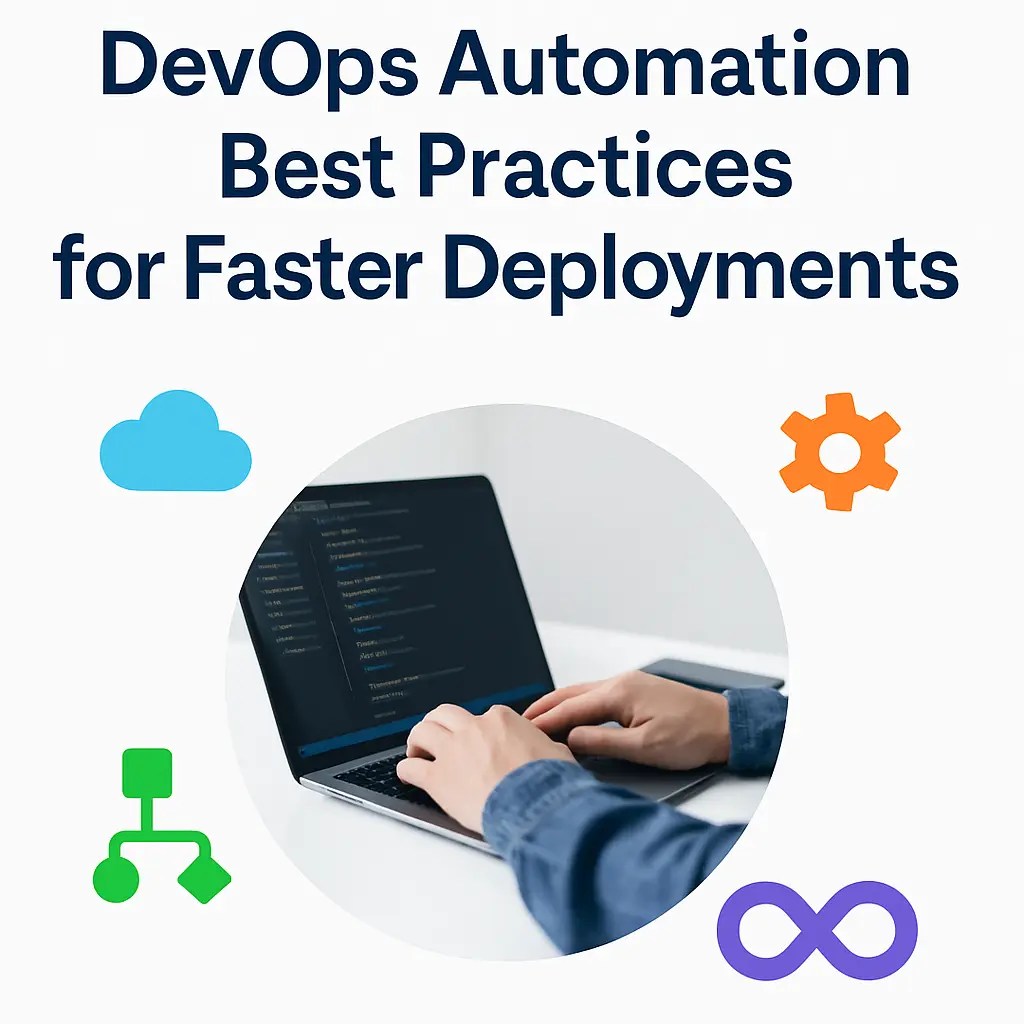
DevOps automation has become essential for teams that want faster, safer, and more predictable software delivery. This article explores how automation supports modern development workflows, from continuous integration and testing to infrastructure provisioning, security, monitoring, and deployment governance. By understanding these practices deeply, organizations can reduce manual effort, improve release quality, and build a stronger DevOps culture.
Building a Reliable Automation Foundation
Effective DevOps automation begins long before a deployment pipeline is created. It starts with a clear understanding of how software moves from idea to production, where delays occur, and which manual steps create risk. Many teams rush to automate isolated tasks, but the strongest results come from designing an automation foundation that reflects the entire delivery lifecycle. This means looking at source control, build systems, testing, infrastructure, approvals, release strategies, monitoring, and feedback loops as connected parts of one system.
The first principle is consistency. Every environment, from a developer laptop to production, should be created and configured in a repeatable way. When environments are manually adjusted, even small differences can cause unpredictable failures. A feature may work in staging but fail in production because a dependency version, network rule, or configuration value is different. Automation reduces this uncertainty by turning setup instructions into executable definitions. Infrastructure as code, configuration templates, container images, and environment variables all help teams describe systems in a way that can be reviewed, versioned, and reused.
Version control is another essential foundation. It should not be limited to application code. Pipeline definitions, infrastructure modules, policy rules, database migration scripts, and configuration files should also live in version control. This gives teams a historical record of changes and makes it easier to identify what caused a failure. If a deployment breaks after a pipeline update, the team can compare changes, roll back safely, and learn from the incident. Version control also supports collaboration because every change can be reviewed through pull requests before it reaches shared environments.
Automation should be introduced with a clear purpose, not just because a tool makes it possible. A useful way to prioritize is to identify repetitive, high-risk, and time-consuming tasks. Repetitive tasks are good candidates because automation saves engineering time. High-risk tasks are valuable because automation reduces human error. Time-consuming tasks matter because shortening them improves developer feedback and release speed. For example, manually packaging an application may take only a few minutes, but if it is done several times a day and mistakes can break deployments, automating it has significant value.
Continuous integration is usually the first major automation milestone. A strong CI process ensures that every code change is automatically built and tested before it is merged or released. This does not mean running every possible test immediately. Instead, the pipeline should be designed in layers. Fast checks, such as linting, formatting, dependency validation, and unit tests, should run early because they provide quick feedback. Slower tests, such as integration and end-to-end tests, can run later or in parallel. This structure helps developers identify problems quickly without waiting for a long pipeline to finish.
Teams also need to avoid the mistake of treating automation as separate from quality. A pipeline that deploys quickly but ignores test reliability, code review, security checks, or rollback planning can increase risk rather than reduce it. Good automation improves both speed and confidence. The goal is not simply to move faster; it is to make the correct path the easiest path. When tests, scans, approvals, and deployment steps are built into the workflow, teams can release frequently while maintaining control.
Documentation remains important even in highly automated environments. Automation can hide complexity, which is helpful when everything works but dangerous when something fails. Engineers should understand what each pipeline stage does, what assumptions it makes, and how to troubleshoot it. Short runbooks, meaningful pipeline logs, and clear naming conventions make automated systems easier to maintain. Documentation should explain why key decisions were made, not just how tools are configured.
For teams that want a broader strategic overview, resources such as DevOps Automation Best Practices for Faster Deployments can help connect technical implementation with delivery goals. The most successful organizations treat automation as an evolving capability. They start with stable basics, measure outcomes, and then refine pipelines based on real bottlenecks rather than assumptions.
Designing Faster and Safer Delivery Pipelines
Once the automation foundation is in place, the next step is to design delivery pipelines that support frequent releases without creating instability. A delivery pipeline should be more than a sequence of technical commands. It should represent the organization’s release philosophy: how changes are validated, how risk is reduced, and how production updates are controlled. The best pipelines are fast enough to encourage small changes, strict enough to catch defects, and flexible enough to support different release scenarios.
Small batch size is one of the most important ideas in DevOps automation. Large releases are harder to test, harder to review, and harder to roll back. When teams release many changes at once, it becomes difficult to identify which change caused a problem. Automation works best when changes are small, frequent, and independently deployable. This approach reduces risk because each deployment contains less uncertainty. It also improves learning because feedback arrives sooner.
A well-designed pipeline usually contains several connected stages:
- Code validation: Static analysis, formatting checks, dependency review, and unit tests confirm that the change meets basic standards.
- Build and packaging: The application is compiled, packaged, or containerized in a repeatable way so the same artifact can move through environments.
- Automated testing: Integration, contract, performance, and end-to-end tests verify that the application behaves correctly in realistic conditions.
- Security and compliance checks: Vulnerability scanning, secret detection, license validation, and policy checks reduce security exposure.
- Deployment orchestration: Automated deployment tools release the approved artifact using controlled strategies such as rolling updates, blue-green deployments, or canary releases.
- Monitoring and feedback: Logs, metrics, traces, alerts, and user-impact signals confirm whether the release is healthy.
The artifact principle is especially important. Teams should build once and promote the same artifact across environments. If an application is rebuilt separately for staging and production, there is no guarantee that the production version is identical to the tested version. Dependencies may change, build settings may differ, or hidden environmental factors may affect the output. Building once and promoting the artifact preserves integrity and makes releases more predictable.
Automated testing should be treated as a portfolio rather than a single activity. Unit tests are fast and useful for validating small pieces of logic, but they cannot prove that services communicate correctly. Integration tests verify interactions between components, but they may be slower and more fragile. End-to-end tests simulate user journeys, but they should be limited to the most critical flows because they are expensive to maintain. Contract tests are valuable in microservice architectures because they confirm that service interfaces remain compatible. A strong pipeline balances these test types to create reliable feedback without unnecessary delay.
Security automation is no longer optional. Modern DevOps teams often use the term DevSecOps to describe the integration of security into development and operations workflows. Instead of waiting for a late-stage security review, teams automate checks throughout the pipeline. Secret scanners prevent credentials from entering repositories. Dependency scanners detect vulnerable libraries. Container scanners inspect base images. Infrastructure policy tools verify that cloud resources follow security standards. These checks should produce clear, actionable results. If security tools generate too many false positives or vague warnings, developers may ignore them, weakening the entire process.
However, automation should not remove all human judgment. Some changes require review because they affect architecture, compliance, customer data, or operational risk. The key is to make approvals meaningful rather than bureaucratic. Manual gates should be reserved for decisions that genuinely need human context. Routine approvals, especially those that simply confirm a checklist was followed, are better replaced with automated policy checks. This allows teams to maintain governance while avoiding unnecessary delays.
Deployment strategies play a major role in safe automation. A simple all-at-once deployment may be acceptable for low-risk internal tools, but customer-facing systems often need more careful release methods. Blue-green deployment keeps two production environments available: one active and one prepared for the new release. Traffic switches when the new environment is verified. Canary deployment releases the change to a small percentage of users first, allowing teams to detect issues before full rollout. Rolling deployment updates instances gradually, keeping the service available during the release. Feature flags separate deployment from release, allowing teams to ship code without immediately exposing it to all users.
Rollback planning must be part of pipeline design, not an afterthought. A deployment is not truly automated if recovery still depends on improvised manual actions. Teams should define what rollback means for the application, infrastructure, and database. Application rollback may be straightforward if previous artifacts are available. Database rollback can be more complex because schema changes and data transformations may not be easily reversible. For this reason, teams often use backward-compatible database migrations, expand-and-contract patterns, and feature flags to reduce rollback risk.
Observability closes the loop. After a deployment, the pipeline should not simply report success because commands completed. It should help determine whether the system is actually healthy. Metrics such as error rates, latency, traffic volume, saturation, and resource usage provide early warning signs. Logs help explain specific failures. Distributed tracing shows how requests move through services. User experience metrics reveal whether customers are affected. Automated deployment verification can compare these signals against acceptable thresholds and pause or roll back a release when problems appear.
Additional implementation guidance can be found in DevOps Automation Best Practices for Faster Deployments, especially for teams refining their pipeline structure. The central lesson is that speed and safety are not opposites. When automation is designed thoughtfully, each release becomes smaller, more visible, and easier to control.
Scaling DevOps Automation Across Teams and Organizations
As organizations grow, DevOps automation becomes more complex. A pipeline that works well for one team may not automatically scale across dozens of services, multiple cloud accounts, different compliance requirements, and distributed engineering groups. Scaling automation requires standardization where consistency matters and flexibility where teams need autonomy. Too much central control slows innovation. Too little alignment creates fragmented tooling, duplicated effort, and operational risk.
Platform engineering has emerged as a practical way to solve this challenge. Instead of forcing every team to build and maintain its own deployment system, a platform team provides reusable services, templates, pipelines, and self-service capabilities. Product teams can deploy applications, provision infrastructure, view logs, manage secrets, and monitor services without reinventing the same solutions. A strong internal platform reduces cognitive load, allowing developers to focus on business value while still following organizational standards.
The best platforms are built around user needs. Developers should not feel that automation standards are obstacles imposed from above. They should experience the platform as a faster and safer path to production. This means investing in good developer experience: clear documentation, simple interfaces, reliable templates, helpful error messages, and fast support. If the approved platform is difficult to use, teams will create workarounds. If it is easier than manual alternatives, adoption becomes natural.
Standardization should focus on repeatable patterns. For example, an organization might define approved pipeline templates for web applications, APIs, background workers, and infrastructure modules. Each template can include common security scans, artifact handling, deployment stages, and monitoring hooks. Teams can customize certain parameters while still benefiting from shared best practices. This creates consistency without forcing every service into an identical mold.
Secrets management is a critical scaling concern. In immature environments, secrets often appear in configuration files, scripts, chat messages, or local machines. This creates serious security risk. Automated systems should retrieve secrets from secure vaults at runtime, apply least-privilege access, rotate credentials regularly, and audit usage. Developers should not need to know production passwords to deploy software. The pipeline should have controlled access based on identity, environment, and purpose.
Infrastructure automation must also mature as systems grow. Infrastructure as code allows teams to create cloud resources consistently, but it requires discipline. Modules should be reusable and tested. State management should be protected. Changes should be reviewed before being applied. Policy-as-code tools can prevent risky configurations, such as public storage buckets, overly permissive security groups, or unencrypted databases. Automated cost checks can also help prevent accidental overprovisioning, which becomes increasingly important at scale.
Measurement helps organizations understand whether automation is delivering value. Common DevOps metrics include deployment frequency, lead time for changes, change failure rate, and mean time to recovery. These metrics are useful because they connect engineering activity to delivery outcomes. However, they should be used carefully. The goal is improvement, not punishment. If teams fear that metrics will be used against them, they may optimize for appearances rather than real performance. Healthy measurement encourages learning, transparency, and targeted investment.
Culture remains the hardest part of DevOps automation. Tools can automate tasks, but they cannot automatically create trust between development, operations, security, and business teams. Successful automation depends on shared ownership. Developers need to understand operational impact. Operations teams need to enable delivery rather than act only as gatekeepers. Security teams need to provide guardrails that fit developer workflows. Business stakeholders need to support incremental releases instead of demanding large, risky launches.
Incident learning is another sign of mature automation. Failures will still happen, even in advanced DevOps environments. The difference is how the organization responds. Blameless post-incident reviews help teams identify system weaknesses instead of blaming individuals. If a manual approval was skipped, the deeper question may be why the process allowed it. If a bad deployment reached production, the team should ask which automated test, policy, or monitoring signal could catch it next time. Each incident becomes an opportunity to improve the automation system.
Scaling also requires lifecycle management. Pipelines, templates, and infrastructure modules age over time. Dependencies become outdated. Security requirements change. Cloud services evolve. A neglected automation system can become a source of technical debt. Organizations should treat automation code with the same care as product code. It needs owners, reviews, testing, refactoring, and retirement plans. Old deployment scripts and unused pipeline paths should be removed to reduce confusion and risk.
Finally, teams should remember that automation is not about eliminating people from the delivery process. It is about removing unnecessary friction so people can focus on higher-value work. Engineers should spend less time copying files, waiting for approvals, fixing environment drift, or repeating manual checks. They should spend more time designing resilient systems, improving user experience, analyzing production feedback, and solving meaningful business problems. That is the real promise of DevOps automation.
DevOps automation helps organizations deliver software faster, but its greatest value is reliability. By building consistent foundations, designing intelligent pipelines, integrating security, improving observability, and scaling shared platforms, teams can reduce risk while increasing release speed. The best approach is gradual and disciplined: automate what matters, measure outcomes, learn from failures, and continuously improve the delivery system.